
Iron Infusions at Core Health: Feraheme and Venofer, Explained
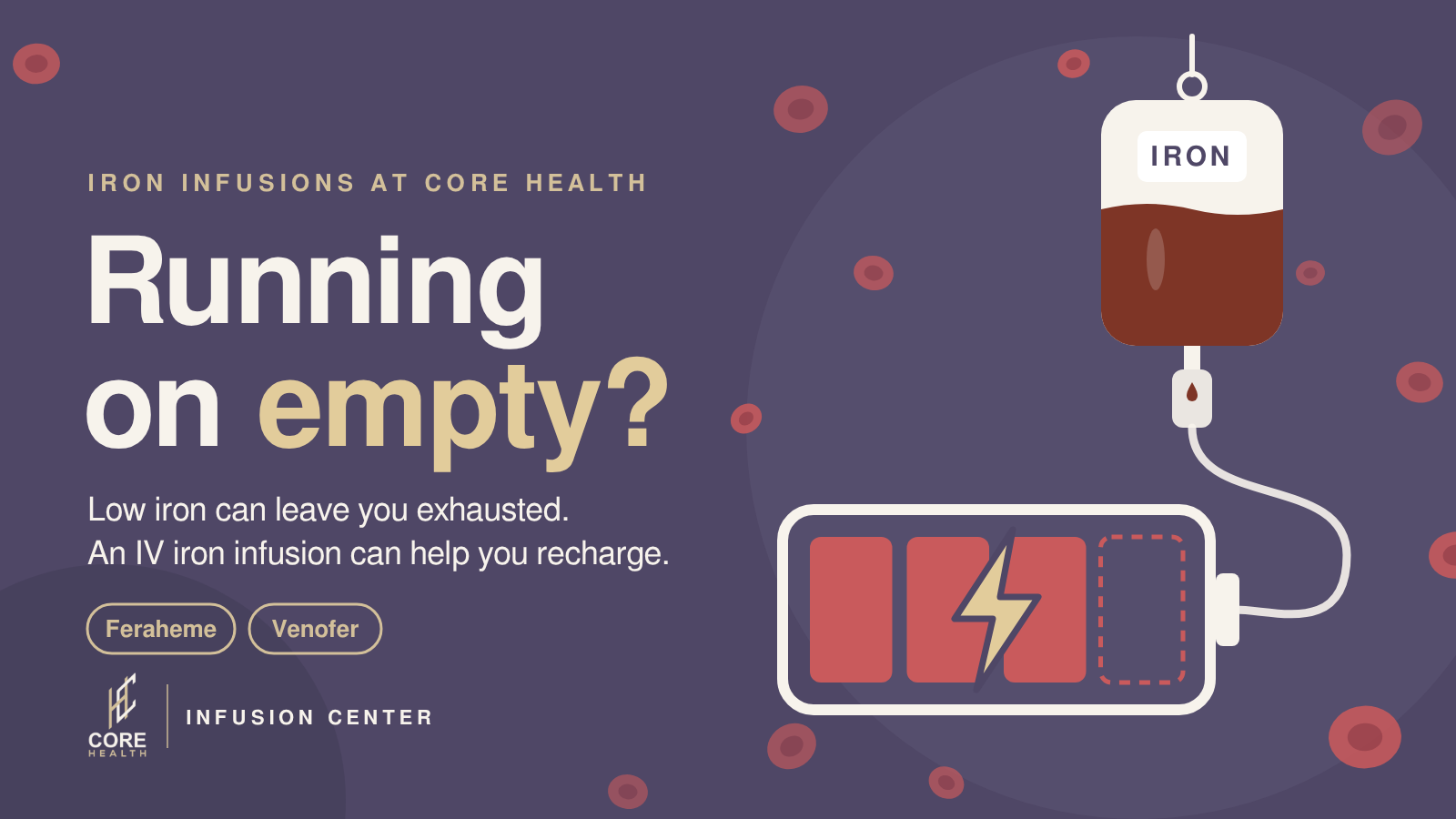
Core Health Infusion Center now offers two iron infusions, Feraheme and Venofer, for adults whose iron levels haven't come back up with pills.
Tired all the time? It could be your iron
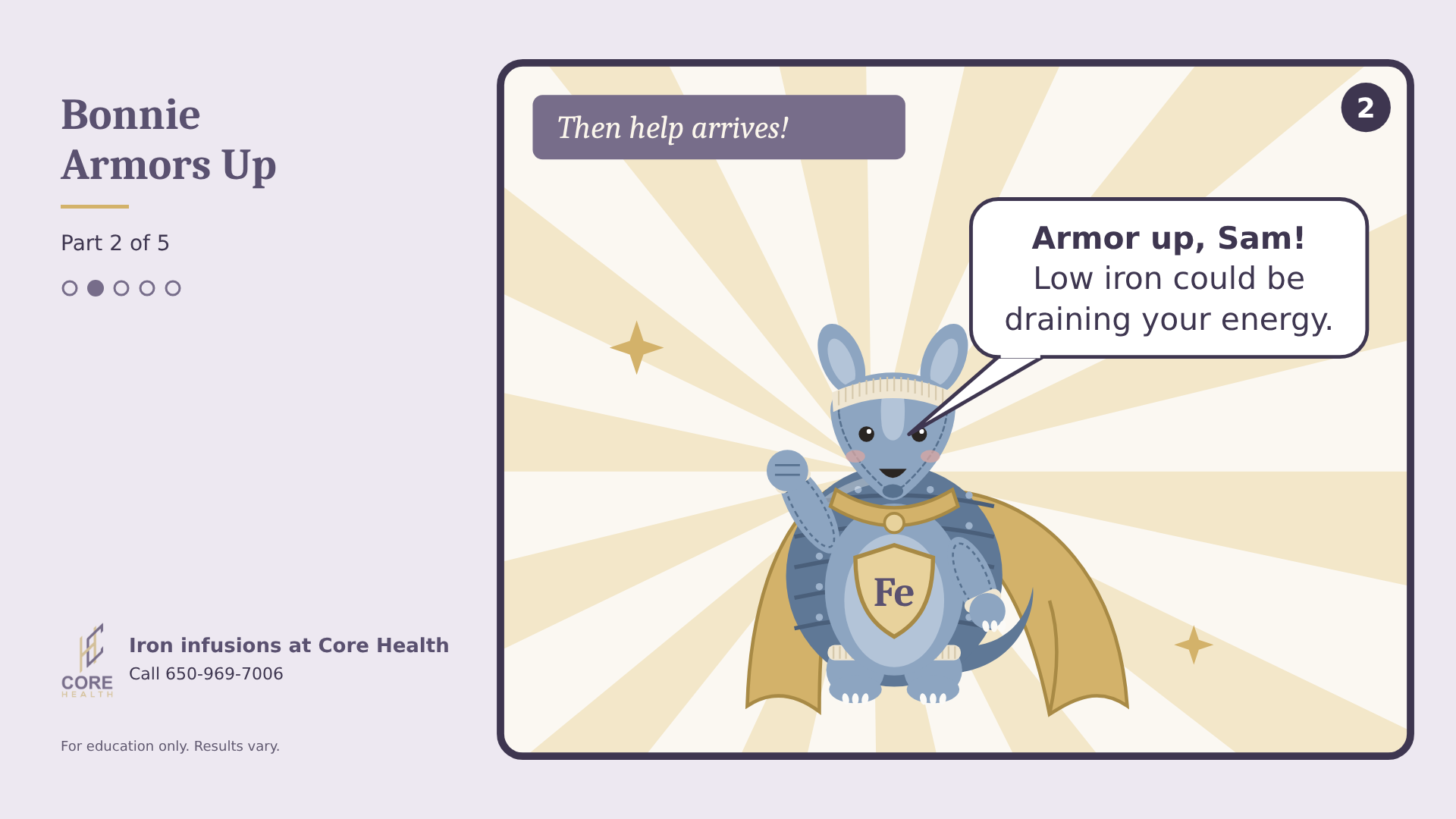
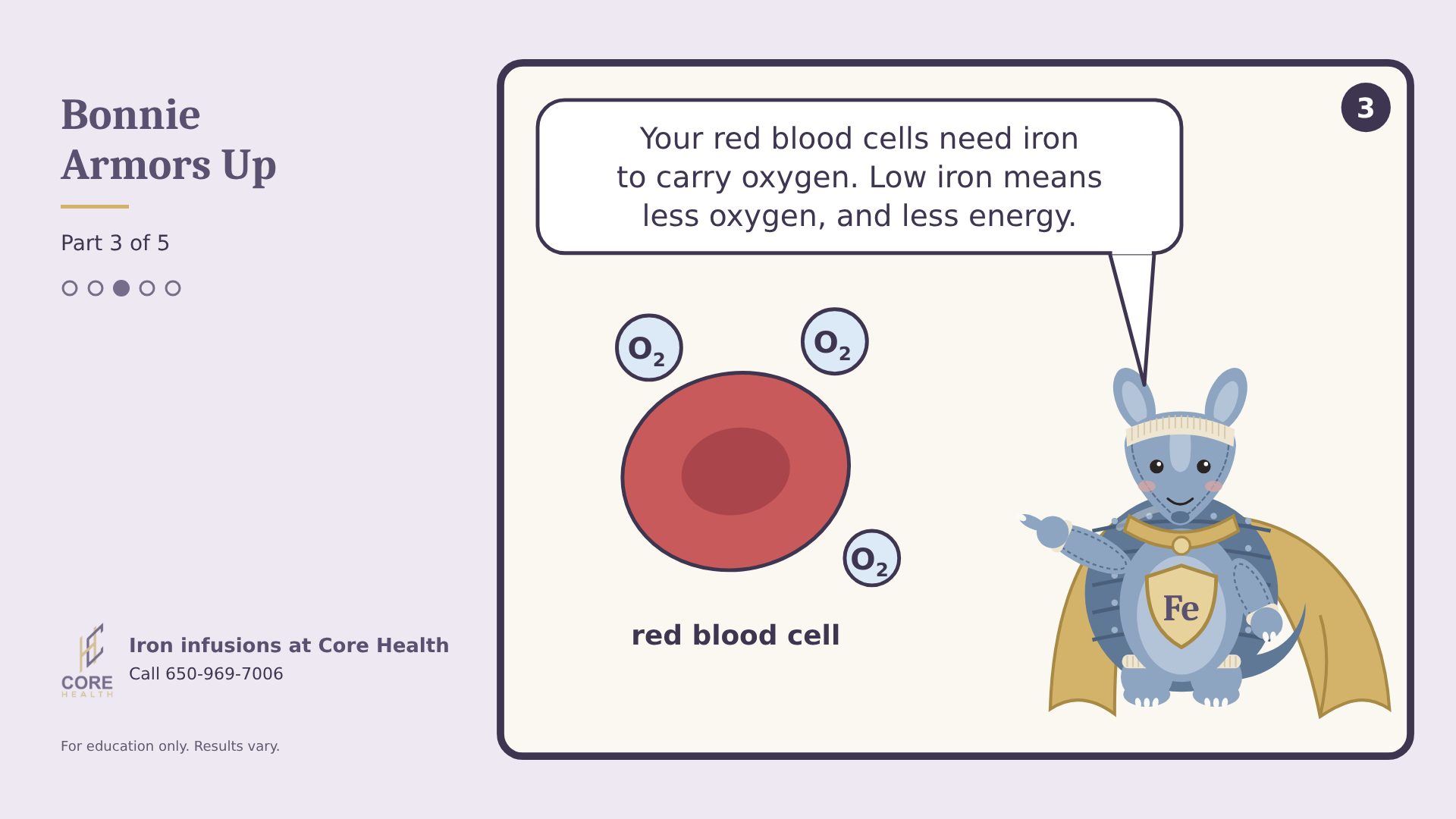
Iron is what your body uses to make hemoglobin, the part of your red blood cells that carries oxygen. When iron runs low, you make fewer healthy red blood cells. That condition is called iron deficiency anemia.
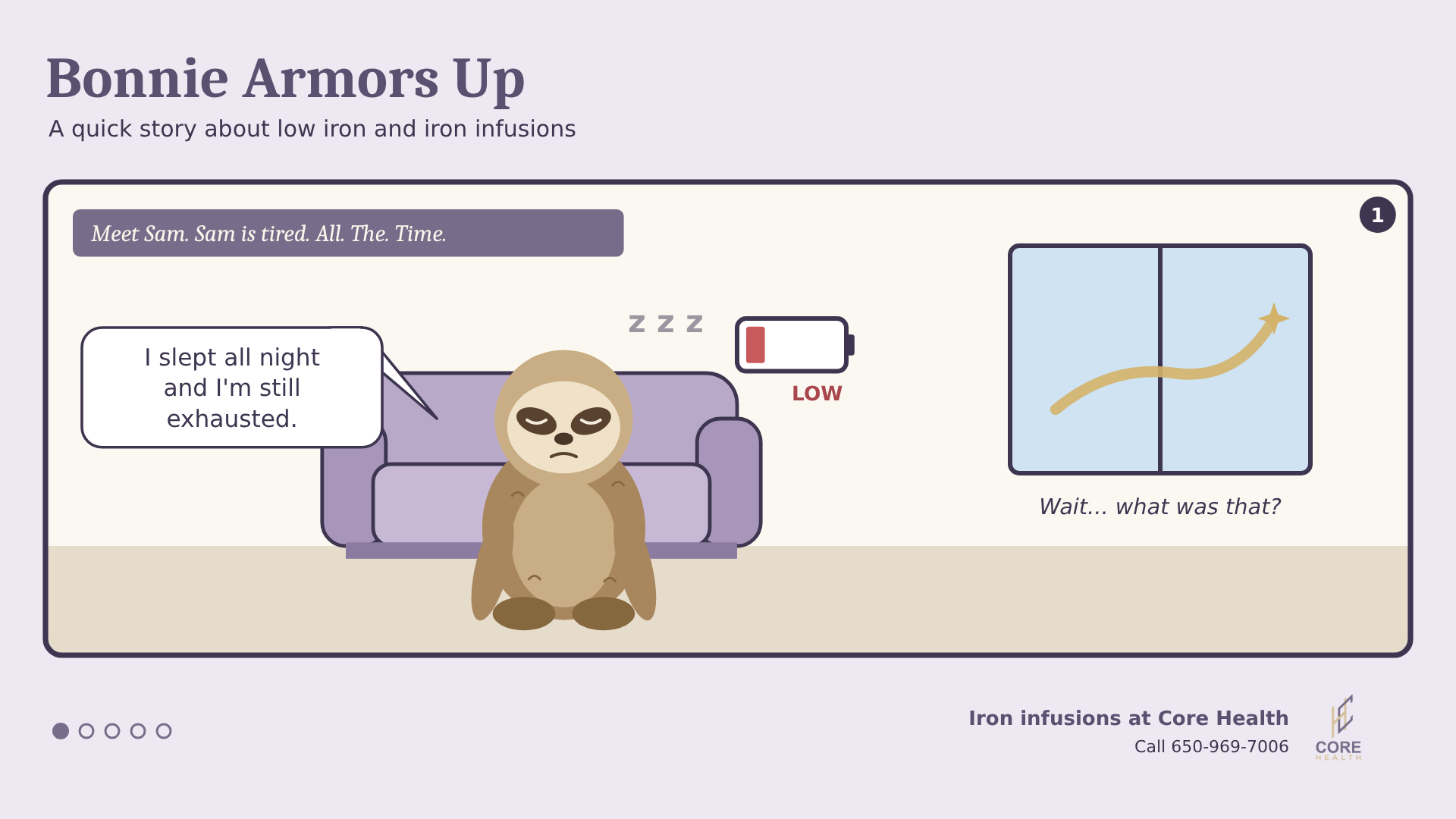
It often creeps up slowly, so many people get used to feeling run down. Common signs include:
Tiredness that sleep doesn't fix
Shortness of breath or a racing heart with everyday activity
Pale skin, cold hands and feet, or brittle nails
Headaches, dizziness or trouble concentrating
Restless legs at night, or cravings for ice
Iron pills are usually the first step, and they work well for many people. But not for everyone. Some people can't tolerate the stomach upset and constipation. Some can't absorb iron well because of conditions such as celiac disease, inflammatory bowel disease or weight-loss surgery. And for some, ongoing blood loss drains iron faster than pills can replace it. That's where an iron infusion can help.
What an iron infusion does
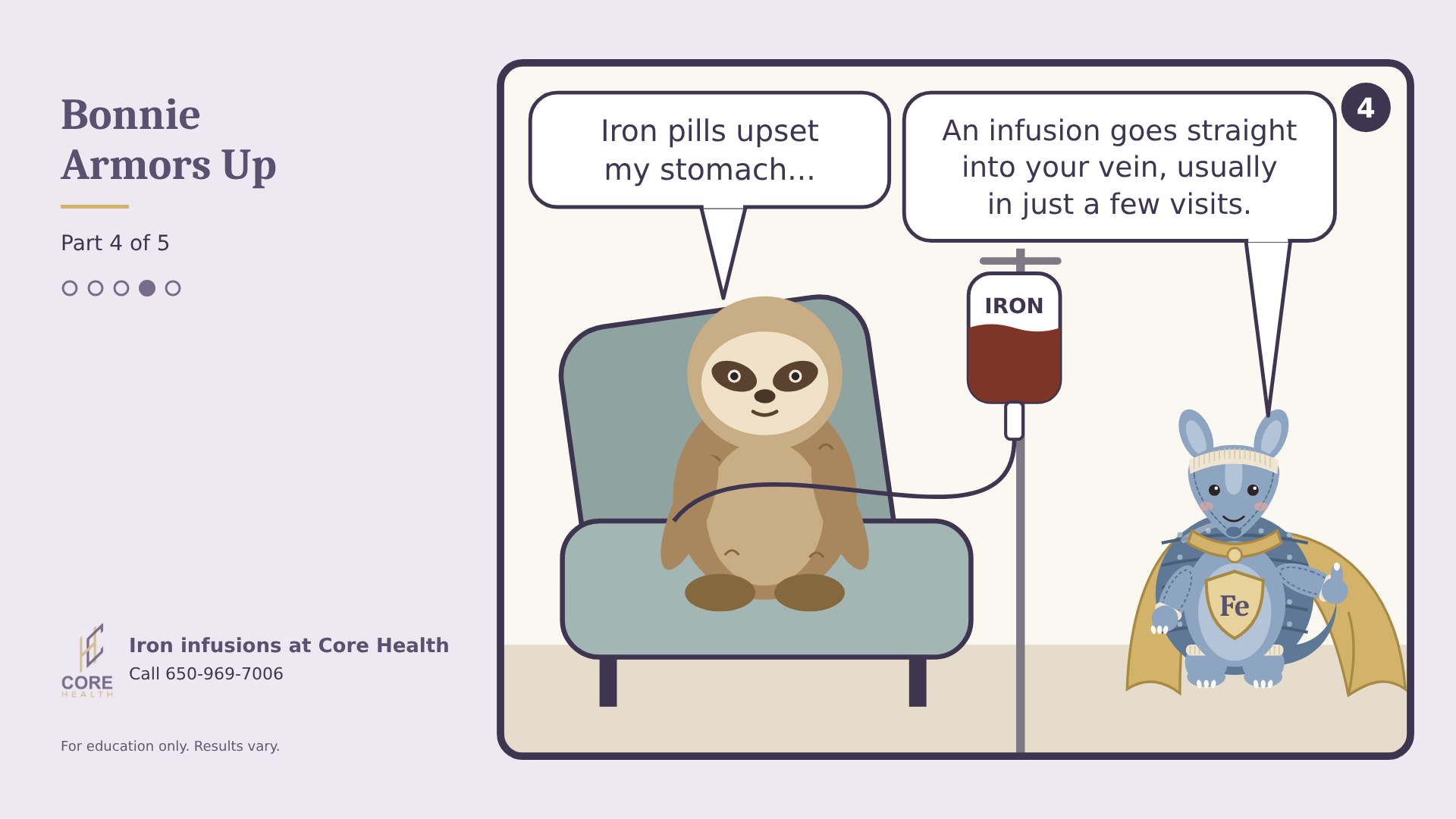
An iron infusion puts iron straight into your bloodstream through a small IV in your arm. Because it skips the gut, it avoids the stomach side effects of pills and works even when your body can't absorb iron from food or tablets. It also refills your iron stores in a few visits, instead of over months.
Your doctor may suggest an iron infusion if you have iron deficiency anemia and:
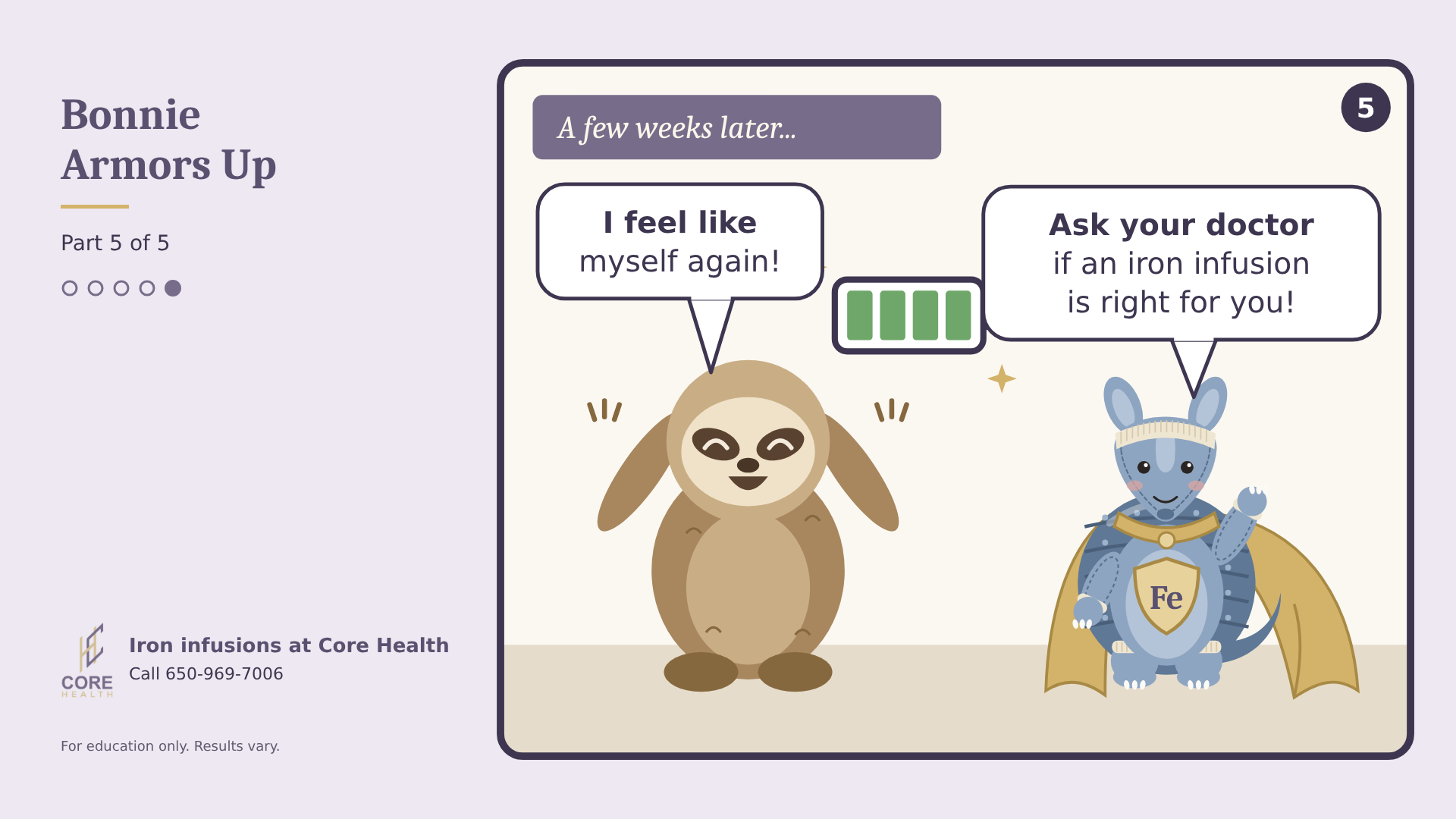
Iron pills upset your stomach too much to keep taking them
You've taken iron pills and your levels haven't improved
You have chronic kidney disease
You have a condition that limits iron absorption, or ongoing blood loss
An infusion refills your iron, but it doesn't fix why it ran low. Your doctor will still look for the cause, such as heavy periods, stomach or bowel bleeding, or a diet low in iron.
Feraheme and Venofer: how they compare
The biggest practical difference is how many visits each takes. Feraheme is usually two infusions about a week apart; Venofer is given in smaller doses over more visits.
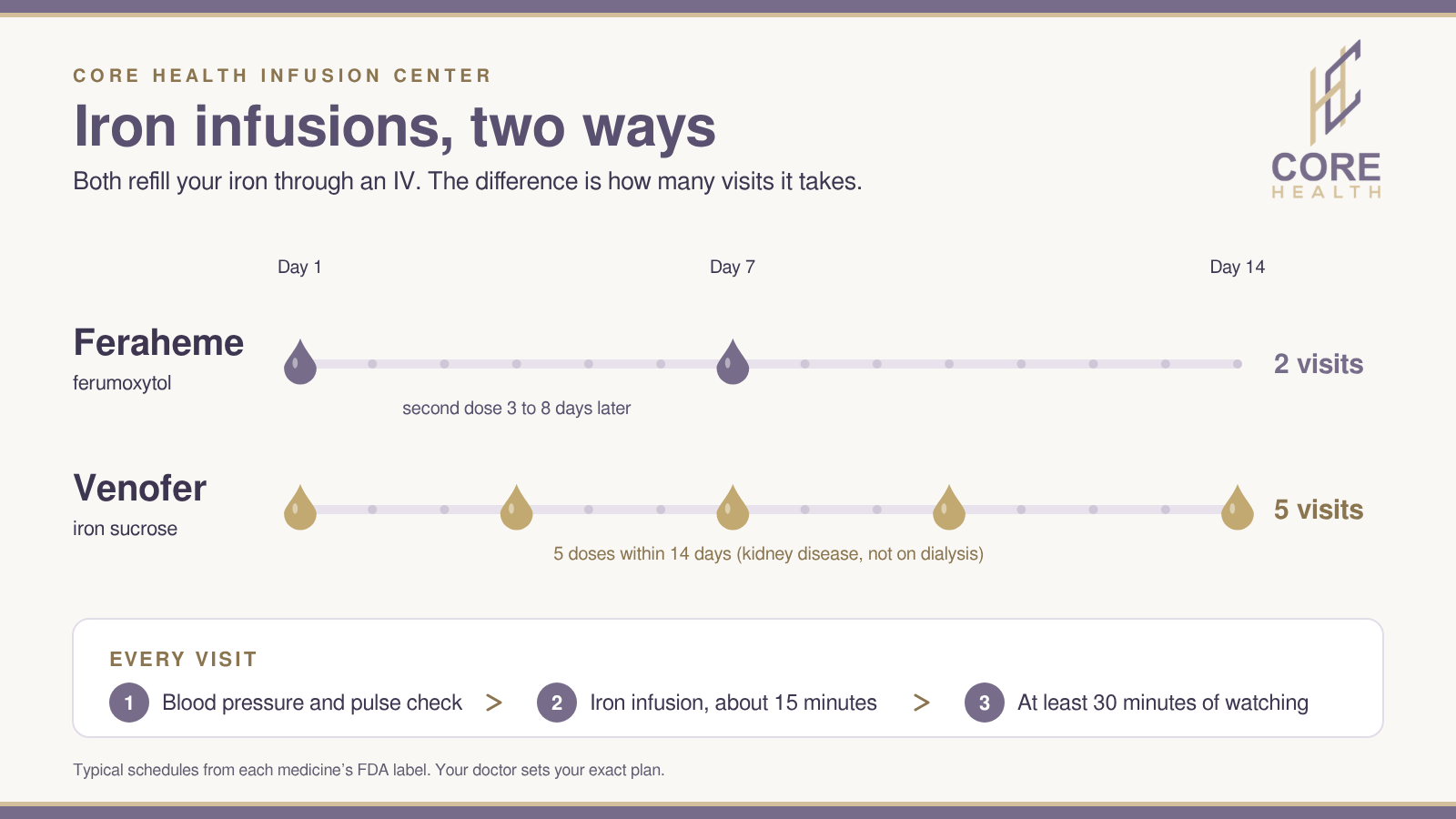
Feraheme (ferumoxytol)
Venofer (iron sucrose)
FDA-approved for Adults with iron deficiency anemia who can't tolerate iron pills, didn't respond to them, or have chronic kidney disease
Both replace iron the same basic way. Your doctor chooses between them based on your health history, your kidney function, your insurance, and how many visits works for you. Doctors sometimes prescribe these medicines outside the uses listed above when they judge it right for a patient.
Iron and bleeding disorders like hemophilia
People with bleeding disorders, including hemophilia, are more likely to run low on iron, because every bleed takes iron with it. The National Bleeding Disorders Foundation's medical advisory council recommends checking iron and blood counts every year for everyone with an inherited bleeding disorder, whatever their age, sex or severity.
Risk is highest after large or repeated bleeds, after surgery, and for women and girls with heavy periods, which affect up to 80% of those with a bleeding disorder. When iron pills aren't enough to keep up with the loss, the council says IV iron should be strongly considered. Feraheme and iron sucrose (Venofer) are both among the options it lists.
To be clear, an iron infusion does not treat hemophilia itself. It replaces the iron that bleeding has used up. Your hemophilia treatment and bleeding plan stay with your hematologist or hemophilia treatment center, and we coordinate your infusions with them.
What to expect at your visit
Most patients sit in a comfortable chair, read or rest, and go home the same day. Plan on about an hour for each visit.
Before: Eat and drink normally. Wear a shirt with loose sleeves, and bring a list of your medicines.
Getting started: A nurse checks your blood pressure and pulse and places a small IV in your arm.
The infusion: The iron runs in slowly, usually over 15 minutes or more. A nurse stays close by the whole time.
Afterward: We watch you for at least 30 minutes, checking your blood pressure and pulse before you leave.
Follow-up: Your doctor will recheck your blood about a month after your last infusion to see how your iron has responded.
Most people go back to their normal day right away. Energy usually improves over the following weeks as your body makes new red blood cells.
Is it safe?
Iron infusions are widely used and well tolerated by most people, but like any IV medicine they can cause reactions. That's why they're given only in a medical setting, by trained staff with emergency treatment on hand.
Serious allergic reactions are rare but possible. Feraheme carries an FDA boxed warning for this, and both medicines' labels warn about it. It's the reason we watch you during and after every infusion.
Blood pressure can drop. We check it before, during and after your infusion.
Milder effects can include nausea, dizziness, headache, or a change in taste for a short time.
Tell your care team before your infusion if you've ever reacted to IV iron or any other IV medicine, have many drug allergies, are pregnant or could be, or have an MRI coming up. During or after your infusion, tell your nurse right away if you feel itchy, flushed, short of breath, lightheaded, or have chest tightness or swelling.
Getting started at Core Health Infusion Center
Iron infusions need a doctor's order. If you think low iron may be behind how you're feeling, start with your primary care doctor, hematologist or kidney specialist. They can check your blood and send a referral to us.
Already have a referral, or have questions? We're happy to help.
Phone: 650-969-7006
Fax (for referring offices): 650-969-7007
Email: Desk@corehic.com
Please don't email personal health details. Call us instead, and we'll take it from there.
Sources
Feraheme (ferumoxytol) prescribing information, U.S. Food and Drug Administration
Venofer (iron sucrose) prescribing information, U.S. Food and Drug Administration
MASAC Document 296: Iron deficiency with and without anemia in the inherited bleeding disorders population, National Bleeding Disorders Foundation
This post is general information, not medical advice. Talk with your own doctor about whether an iron infusion is right for you. If you have a medical emergency, call 911.